
Sidr, Aila
On November 15, 2007, cyclone Sidr viciously pounded the south-western coast of Bangladesh and, before the area could barely recover from this onslaught, it was hit again on May 25, 2009, by Cyclone Aila. The tidal surges were of 6.5 metre high and they left behind a trail of human tragedy and devastation. More than 300 died and 8,000 went missing. About 2.3 million people in 14 districts were estimated to have been ravaged by these two subsequent natural disasters. As many as 100,000 people were forced into slum‐like settlements were they had to live without adequate supply of food and water and some 100,000 livestock were killed and nearly 350,000 acres of cropland were destroyed. It also caused considerable infrastructural losses (Source BMB Site Rep, 11 June 2009 and BDWB). All sweet water sources were contaminated and 2.3 million people lost their drinking water source. Like many other nongovernment organisations, Brotee rushed to reach out to as many as it could, with whatever little resource it could gather from family and friends. A team from Brotee led by the CEO, set off for coastal Pathorghata in Borguna and then for Gabura in Shyamnagar Satkhira. The 19 coastal districts, or nearly one third of Bangladesh, experienced the same devastation caused by the
deadly cyclones. The intensity of the tropical cyclones and their frequency are linked to climate change. To ensure the survival of our coastal ecosystem, our waterways and our coastal people, which is tantamount to the survival of this nation, we must join our efforts.
IT IS ALL DUE TO CLIMATE CHANGE
UNFCC declared, ‘Those least responsible will suffer the most.’ Bangladesh makes no significant contribution to global warming but onethird of its land and people have begun to bear the brunt of its consequences. Fifty years ago there was 0.63% cyclone per year and now it is 1.9% cyclone per year. Climate justice is ignored as inaction of those responsible and the failures of the Paris Agreement and COP 26 make so evident. Once again the divide is between the North and South, the rich and the poor nations, whose
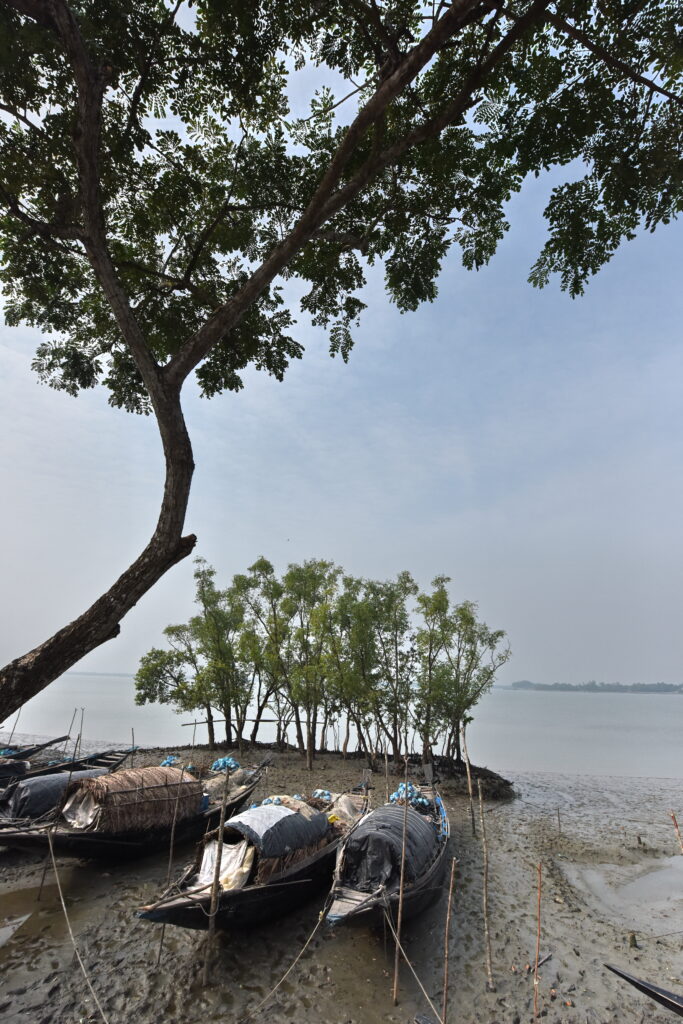
uncompromised ‘ways of life’ cause global warming and leads to the devastating cyclones in Gabura. And the people of Gabura are left to fend for themselves as no one is taking responsibility. CHILDREN WERE THE WORST HIT Children were the worst hit, traumatised and dazed. Overnight, a child lost her power of speech from the shock. Another child, who lost her family and now lives with her uncle, had held on to a palm tree all night and survived to tell her story. Another little girl, who had on her lap her little brother, when a gushing wave washed him away, kept blaming herself. Children were orphaned. Barren fields, dead crops, wiped-out homes, schools, roads, marooned people and homeless children on a little islet, called Gabura surrounded by only polluted salt water.
The children had nothing but salt water to drink.
NABIC EXTENDS SUPPORT
With help from North American Bangladeshi Islamic Community (NABIC), a US-based international NGO of expatriate Bangladeshis, Brotee has started injecting new hope into Gabura, nurturing it at the grassroots. Brotee is ensuring child nutrition as well as their access to primary schooling, drinking water and primary health care. A group of young vanguards trained by Brotee facilitates these actions.
GABURA: BROTEE’S STUDY LAB
Brotee, from the outset, was keen to develop an understanding of Gabura and in finding solutions to address the climate impacts on coastal communities. Social and environmental solutions were developed through action research and scientific research to provide coping skills and strategies to Gabura people so that they can live with climate change. Brotee and its sister concern, Plasma Plus, an ISO certified application laboratory, jointly undertook a programme to assess the socio-economic, health and environmental condition of the post-Aila Gabura in 2014 with funds from PKSF (climate fund).
Brotee decides to protect the children of Gabura.
Brotee’s mission was to protect human dignity and ensure natural harmony to build a safe haven for the coastal children who are the worst victims of natural disasters and climate change.
Adoption of vulnerable children: 703 through distance adoption Formed eight cooperatives with 603 caregivers/mothers who a saved Tk 7,00,000 as micro entrepreneurs, facilitated six youth-run free primary schools, preserved eight ponds with PSF to improve water security,
initiated floating health care service that reaches the doorsteps of all villages, facilitated sundari plantation (so far a 4-km expansion was made), strengthening the existing mangrove forest, the protector against cyclones and climate change. Some 15 youth action groups consisting of village vanguards (150 girls and boys) are driving the changes by teaching children, planting trees, mobilising the community, ensuring service delivery and fighting social injustice especially against children and women. In short, they are rebuilding their villages. Through such actions, Brotee has reached 28,000 people – more than 50% of the population. With the floating health service delivered from a boat, Brotee has reached all 48,000 inhabitants of Gabura’s 15 villages.