

Brotee's water journey:Our right to safe drinking water is our right to life
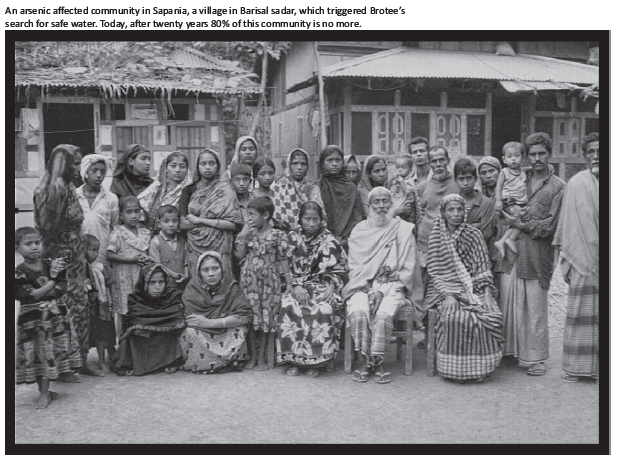
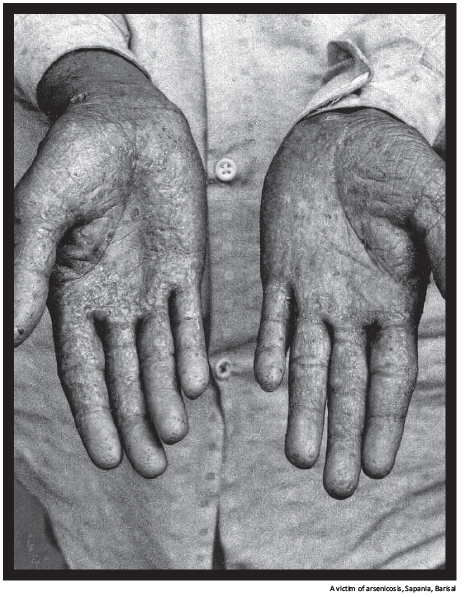
Arsenic screening research: It all began with the finding that groundwater in Bangladesh was contaminated by arsenic and Bangladesh was facing the largest incident of mass poisoning in the world. This led to the screening of the groundwater as well as a further discovery that people of Shapania in Barisal district were slowly dying while they had no clue what was causing such deaths. The research findings led to an awareness-raising campaign by Brotee to challenge the existing water policies and throw light on the gross negligence in monitoring water quality, which eventually led to the poisoning of the groundwater in 61 out of the 64 districts. As the facts became known, world experts were forced to acknowledge that this poisoning of a people was of a ‘genocidal proportion’.
National Campaign and International Legal Battle:
Brotee, after taking into cognizance the unwillingness of national and international actors to take responsibility for the victims of arsenic poisoning, embarked on an international legal campaign and, accordingly, filed a case against the British Geological Survey in the British High Court for negligence during the testing of water
quality in Bangladesh in 1992.
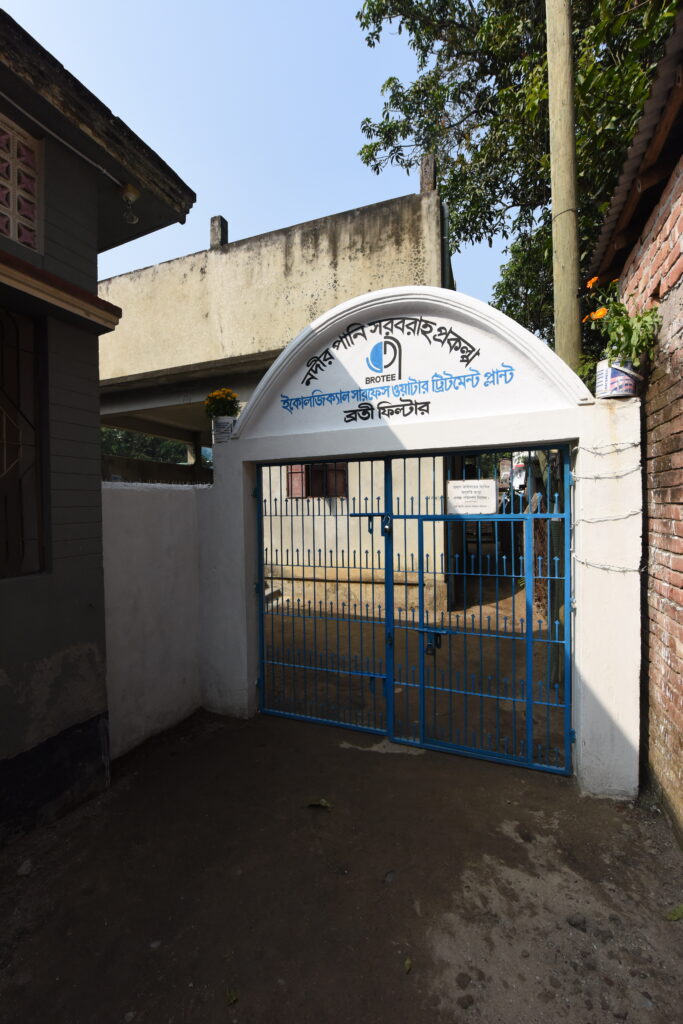
Brotee River Water Filter : Ecological Surface Water Treatment Plant (ESWTP) in Chamagram, Baroghoria, Chapainawabganj
BGS’s procedure was faulty as it failed the WHO standards of water quality testing and what was tantamount to a crime was remaining silent about the presence of arsenic in groundwater. A case was finally filed with the help of the Bengali diaspora in Britain, British Solicitor Firms, and the British Aid Commission. The objective of this campaign is to increase the accountability of multinationals working in poor developing countries. Brotee takes the campaign to the UK, The Hague, and Germany, engages with the British public and the government in discourse in the House of Lords, and submits a memorandum to PM Blair. Poor data and bad policy led to the aggressive sinking of millions of shallow tube wells all over the country, causing serious damage to the groundwater source people depended upon. As part of the second legal campaign, a case was filed in the High Court in Bangladesh to hold accountable the people involved in water-providing agencies, the local government, and the NGO Affair Bureau for their negligence.
Brotee also wanted a ban slapped on the use of shallow tube wells and to build pressure to ensure the payment.
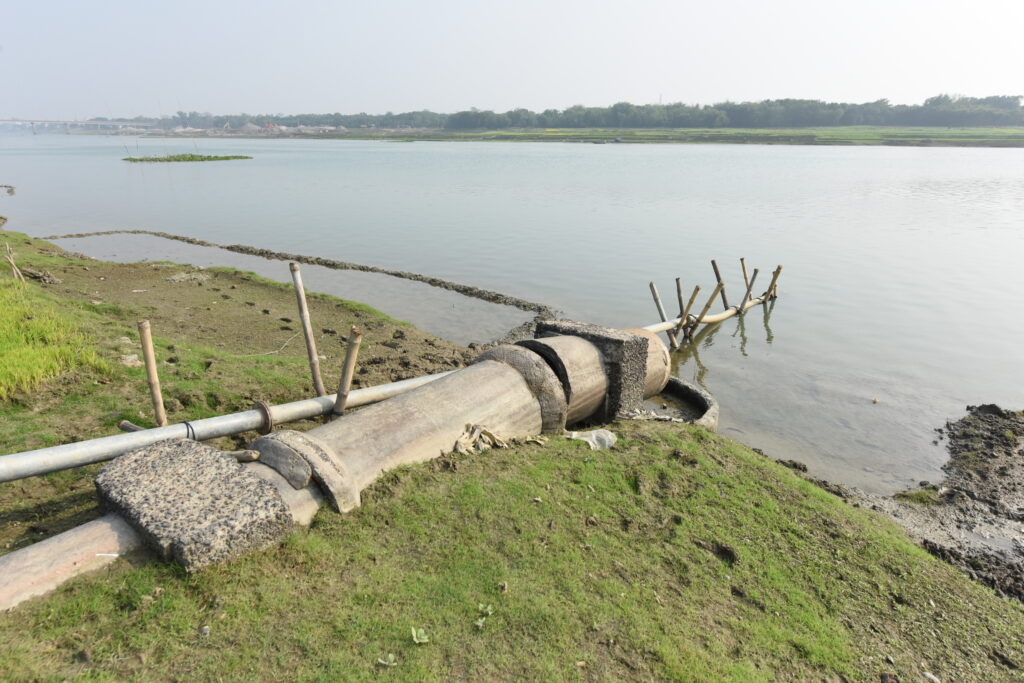
Collecting water from the Mahananda River – the Intake well on the river Bank in Chamagram Baroghoria, Chapainawabganj (above), Brotee’s
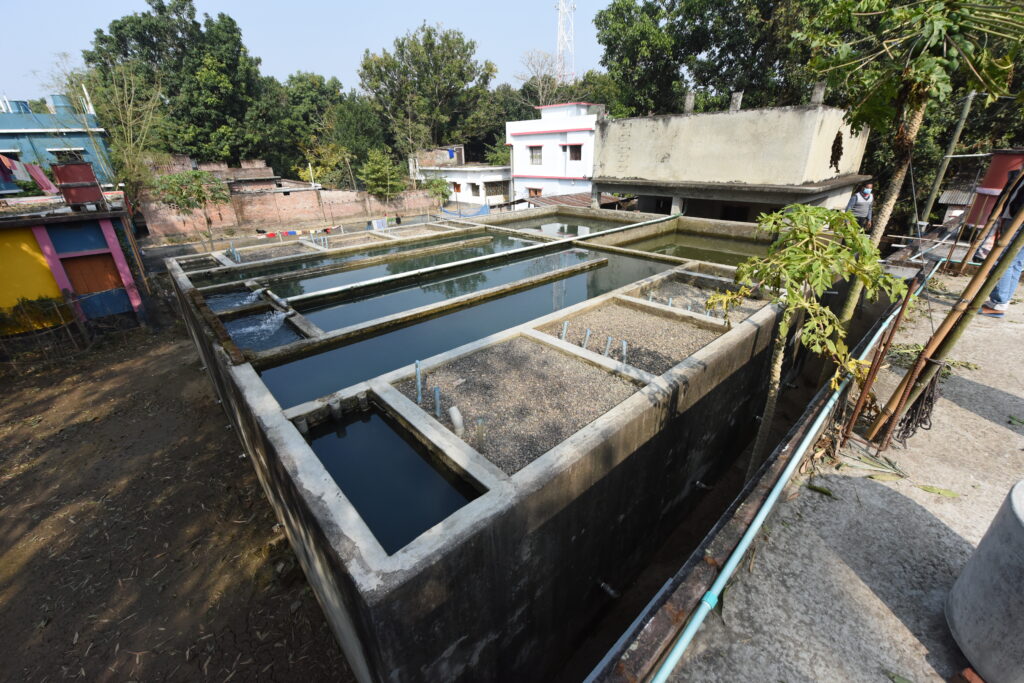
ESWTP – Chambers for roughing, filtering, and storing treated water – nature-based water solutions for arsenic mitigation in the Barinda area.
Of compensation to the victims as well as to promptly find a solution to the water problem after sealing off all sources of poison.
We did not win the case in the British court, but the case brought significant changes in the policies of the BGS. Bangladesh courts gave directives banning the sinking of shallow tube wells in places where there is arsenic in groundwater and where surface water is available. Brotee’s surface water project From talking change to making change – After several years of campaign and discussions among the stakeholders, Brotee finally begins a new journey. It conducts action research to find safe drinking water for
those most thirsty. Brotee draws out a robust action plan – the answer is to be found in surface water. Between 2004 and now two surface water models have been installed:
i. Small water body model – a pond preservation movement, a community action research, for arsenic
mitigation and alternative groundwater source, was first tested in 3 villages of Shapania, Barisal.
The community-managed protocol was developed and is now successfully scaled up in coastal Gabura,
Brotee’ssocial lab. In the past, every village had protected ponds. Now we have protected ponds with PSF, a
scientific way to wean people away from drinking poison, in every village of Gabura. Every village in
Bangladesh must have community-protected ponds. People give the pond for community use, and Brotee
provides technical assistance and trains the community in sustained management. For ten years with
periodic cleansing, these ponds have been in operation.
ii. River water body model: Ecological Surface Water Treatment Plant (ESWTP) – This is inspired by PSF and
global experiences in the ecological use of surface water for drinking
Brotee starts its search for solutions and decides to undertake applied research to make rivers
drinkable, applying universal and natural principles of surface water treatment such as slow sand filtration.
And combining with it local indigenous knowledge and local resources. In four-year action research, started in 2005, with no reference points or other experiences to draw on, Broteebegan, on the nascent ground from zero, and for the next few years, through trial and error, innovates Bangladesh’s first ecological river water model – Ecological River Water Treatment Plant of Bangladesh, a high-grade drinking water system that can produce up to 700,000 liters of water per day supplied through an a6.6-kilometre long pipeline. Every household in three arsenic-affected villages of Chamagram in Chapainawabganj began to receive pure drinking water. A population of 6,000 subscribe to Brotee Water. It is now a self-sustaining project.
Today, Brotee has come full circle and established itself as a Social Architect constructing effective modular solutions to some of the most difficult problems. The three ingredients needed for the success of any social model are action-based in nature, nurtured by the community, set in common sense, and common sense is science.
1. Make Riverwater Potable to achieve SDG 6
Ecological Surface Water Treatment Plant in Bangladesh
Brotee Surface Water Filter
Principle innovator: Sharmeen Murshid
Universal and equitable access to safe and affordable drinking water for all (SDG target 6.1)