
Major projects
A Village Movement to Protect the Rights of the Marginalised Communities in Northern Bangladesh
Period: March 2019 – June 2023
Funded by: FCDO/British aid through Manusher Jonno Foundation
Goal: To establish village movements to protect, preserve and promote the rights of the Ethnic People (EP) to
improve quality of life, social justice and human dignity.
Rehabilitation of Children and Women in Sidr-Aila affected (Gabura) Protection, Preservation and Promotion
of the Climate Vulnerable Child (PVC) in Gabura, Satkhira
Period: March 2010 – February 2025
Funded by: North American Bangladeshi Islamic Community (NABIC)
Goal: To Protect the vulnerable children of Gabura and ensure their basic needs for a life of dignity and monitor
the effects of climate change/cyclone on Gabura, Brotee’s Climate Research Lab.
Floating Healthcare Care Services in Gabura
Period: 2020 -2025
Funded by NABIC
Goal: To provide primary health care to the vulnerable people of Sidr-Aila-affected Gabura, particularly for
pregnant mothers and children
Shetubandhan: A Village Movement to Protect the Rights of the Vulnerable Communities in Northern
Bangladesh
Period: March 2004 – 2016
Funded by: DFID /Manusher Jonno Foundation
Goal: To bring change in the quality of life and standard of HR in 30% of the vulnerable population of 36 targeted
villages of Rajshahi and Naogaon within three years through GKG-HRP.
Protecting the Vulnerable through Community Legal Services
Duration: July 2014 – March 2017
Funded by: Community Legal Service (CLS) / UKAID and the British Council
Goal: To ensure timely justice through strengthening the local legal justice system and legal services to
vulnerable poor people to potentially improve their access to justice and enhance their quality of life.
Right to Fair Elections and Good Governance in the Electoral Process
Monitoring elections since 2001: Ensuring national coverage with support from international donors and using
own resources.
Goal: To strengthen electoral governance and democracy and seek accountability by long-term monitoring of
electoral violence and irregularities as major obstructions to free participation and fair governance. To conduct
electoral research.
Protecting the Right to Safe Drinking Water
Brotee Drinking Water Systems seeks safe waters and a return to surface water as part of arsenic crisis mitigation.
Project 1 – Making river water potable
ESWTP – Ecological Surface Water Treatment Plant – first in Bangladesh
Pilot 2008, trial test 2009, pipeline distribution to 600 households and supply from 2010 to date.
Project 2 – Pond Preservation Movement
Return to community-managed ponds with PSF on salinity-prone coast.
Seven reservoirs and seven PSFs serve 15 villages for eight years.
Sustained by community contribution and management system.
IT Matobbor is a joint venture of the rural young HR defenders, the Gono Gobeshoks and Brotee to promote IT
skills and services among people in out-of-reach communities. Girls have been a major beneficiary of this
project. Around 2,000 rural youths and 400 youths from marginalised communities received training in ICT.
Brotee Social Business promotes nature, organic agro-based products.
List of Social Businesses:
- Honey collection from the Sundarbans
- Production of water tank for rainwater harvesting
- Solar panel
- Production of village-based deshi chicken to provide every marginal child one egg a day to address low
nutrition level in children in Gabura
Since 2015
Project area: Savar upazila of Dhaka
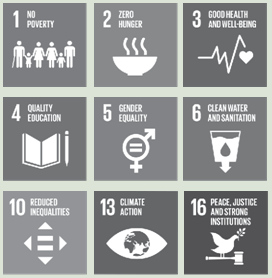
All Actions Align with Government Policies, National Plans and the SDGs
The programme of Brotee supports diverse projects that foster collective action for the advancement of human
rights and good governance. Brotee villages are SDG villages.
Brotee programmes are conceptually and strategically consistent with the relevant provisions of the
Constitution of Bangladesh, the National Integrity Strategy (2012); the Eight Five Year Plan (2016-2020); and the
Sustainable Development Agenda 2030.
Brotee programmes address the following SDGs: