+880-1720243885

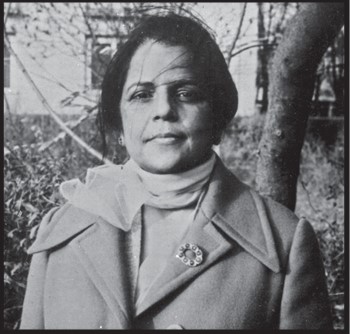
Noorjehan Murshid, born Noorjehan Beg in Taranagar,Murshidabad, on 22 May 1925, rose to prominence as a political-social figure because of her commitment to the empowerment of women. She was an educationist, a social reformer, a social thinker deeply liberal and secular in her worldview.
Noorjehan was one of the leading women in politics in post-partition East Bengal, which became Pakistan and later Bangladesh in 1971, who dared to breach the purdah and ventured outside to mould a public life. She became an elected member of the national assembly in the 1954 and became part of the Jukto Front Government. With Noorjehan Murshid and four other women in the Pakistan Parliament, women's participation in politics in this country witnessed its beginning.
Noorjehan was carrying the legacies of her predecessors, some of the greatest women of South Asia, Begum Rokeya (feminist philosopher and educationist), Ila Mitra and Sarala Devi. During the Tebagha movement, these Bengali revolutionary leaders organised the farmers of the region in support of land reform. Like many from her generation, Noorjahan was deeply secular, influenced by the sociopolitical ideals linked to the Bengal Renaissance and Rammohohan Ray's Brahma Samaj. It was no wonder that while she was a student in Kolkata Unniversity, she with her friends, Shahidullah Kaiser and Rokeya Kabir sailed to Nachol to join Sarala Devi during the Tebagha movement in 1946. It is no wonder, that she, as a political activist, joined the Mujibnagar government to liberate Bangladesh from the clutches of Pakistan in 1971, for which she was tried in absentia and sentenced to 14 years rigorous imprisonment by the Pakistan junta.
Back in 1949, young Noorjehan Murshid broke a major social taboo by becoming the first woman to perform on stage opposite men. She was the first Muslim woman officer in Indian radio and also in Pakistani radio later. She was also the first women minister in Mujib's cabinet in independent Bangladesh. So, it was no wonder that she was instrumental in spearheading many progressive social organisations. She was the first President of the Bangladesh Mahila Samity, the founder President of Azimpur Ladies Club, the founder of Agrani Balika Bidyalay, a founder member of Birdem Diabetic Clinic, a mentor to people who formed Ain-O-Shalish Kendra, besides playing a crucial role in the formation of Brotee. She was also the founder of Sreyoshi, a club for the wives of the Dhaka University teachers.
Noorjehan Murshid was the first light bearer of hope whose legacy inspired the birth of Brotee, a civil society organisation dedicated to human rights and social justice. She has been, and still is, an inspiration for all who work to ensure social transformation at all levels – from the grassroots to the highest echelon of the government.
© 2026 All Right Reserved. Brotee Samaj Kallyan Sangstha
Designed By